
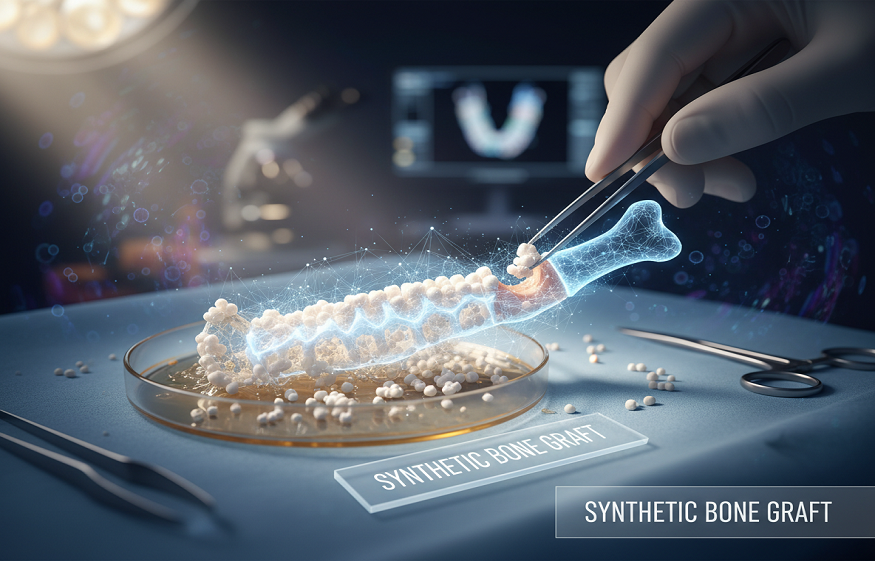
In the world of orthopaedics, innovation rarely arrives with loud fanfare. Instead, it often works quietly in the background—changing lives, improving outcomes, and setting new standards of care. One such innovation making ripples across UK hospitals and clinics is NanoBone, a synthetic bone graft that’s rewriting the recovery stories of patients from Cornwall to the Highlands. If you or a loved one is facing bone reconstruction or repair, understanding what makes NanoBone special could provide both hope and clarity as you chart your path to healing.
The Challenge of Bone Healing in Orthopaedics
Let’s begin with a truth that every orthopaedic patient and surgeon knows too well: bone doesn’t always heal as quickly or perfectly as we’d like. Whether it’s a fracture that won’t unite, a tumour resection, or the need for bone augmentation before joint replacement, gaps in bone can be stubborn obstacles. Traditionally, surgeons have relied on autografts (bone taken from the patient’s own body) or allografts (donor bone). While effective, these approaches come with their own risks and limitations—pain at the donor site, limited supply, risk of disease transmission, and inconsistent integration.
It’s here that the search for a reliable, safe, and effective synthetic bone graft has become one of medicine’s great quests. Enter NanoBone—a next-generation graft material that’s quietly but profoundly changing the landscape of bone regeneration in the UK.
What Is NanoBone?
NanoBone is a synthetic bone graft material, designed to act as a scaffold for new bone formation. Its unique composition—made of nanocrystalline hydroxyapatite embedded in a pure silica gel matrix—mimics the mineral structure of natural bone on a microscopic level. This isn’t just clever chemistry; it’s biomimicry at its best, giving the body the cues it needs to rebuild bone efficiently and effectively.
Since its introduction, NanoBone has been used in thousands of cases worldwide, with a growing number of UK orthopaedic surgeons reporting excellent outcomes in both routine and complex cases.
Read More: Choosing the Right Cosmetic Procedures for Age-Defying Results
How NanoBone Works: Science Meets Healing
At the heart of NanoBone’s impact is its structure at the nanoscale. Here’s why that matters:
- Biomimetic Surface: NanoBone’s surface is designed to look and feel just like real bone at the microscopic level. This helps attract the body’s own bone-forming cells (osteoblasts) and encourages rapid colonisation.
- Porosity and Interconnected Spaces: The graft is highly porous, providing plenty of room for blood vessels, nutrients, and new bone to grow. Unlike some older grafts, NanoBone’s interconnected pores mean that cells can migrate deep into the material, not just along its surface.
- Gradual Resorption: Over time, NanoBone is resorbed and replaced by the patient’s own bone. This gradual transition supports natural healing, without leaving behind foreign material or triggering long-term inflammation.
For the patient, this means that NanoBone isn’t a permanent implant, but a friendly helping hand—one that quietly steps aside as your own bone takes over.
The Human Impact: What UK Patients and Surgeons Are Saying
Behind every innovation are real people—patients yearning for pain-free movement, parents hoping to see their children run again, and surgeons who take pride in every successful outcome.
UK orthopaedic surgeons have shared stories of how NanoBone has changed the course of recovery for their patients:
- Faster Rehabilitation: Many report that patients receiving NanoBone heal more quickly and with less discomfort than those treated with older graft materials.
- Reduced Need for Secondary Surgery: Because NanoBone eliminates the need to harvest bone from other sites on the patient’s body, there’s less pain and fewer complications.
- Greater Confidence in Complex Cases: In situations where bone healing is especially tricky—such as revision surgeries, non-unions, or tumour defects—NanoBone offers a reliable backup that surgeons can trust.
Patients, too, are noticing the difference. Many describe smoother recoveries, less post-operative pain, and a quicker return to normal life. For anyone who’s faced the anxiety of a slow-healing bone, these are more than statistics—they’re a return to freedom, independence, and hope.
Read More: Understanding Your NDIS Support Coordination Options
Why Synthetic Bone Grafts Matter in Today’s NHS
The pressures on the NHS—growing waiting lists, limited resources, and the need for cost-effective solutions—are well documented. In this environment, the advantages of a reliable synthetic bone graft become even more meaningful:
- No Donor Site Morbidity: There’s no need for a second surgery to harvest bone, meaning less time in hospital and lower risk of infection or complications.
- Consistent Quality: Unlike allografts, which vary based on the donor, synthetic materials like NanoBone are manufactured to precise specifications, ensuring consistency and safety.
- Unlimited Supply: Surgeons aren’t constrained by the availability of donor tissue, making planning and logistics simpler—an important factor in busy UK hospitals.
These advantages translate directly into better patient care and more efficient healthcare delivery—a win for everyone involved.
Applications: Where NanoBone Is Making a Difference
NanoBone is impressively versatile. Here are just a few of the scenarios where it’s changing outcomes for UK patients:
- Spinal Fusion: Supporting bone growth between vertebrae, reducing the risk of non-union.
- Fracture Repair: Filling voids in complex or non-union fractures, especially in elderly patients where healing can be slow.
- Bone Tumour Surgery: Reconstructing bone defects after tumour removal, providing a scaffold for new bone formation.
- Joint Replacement: Augmenting bone in revision hip or knee replacements, where bone loss is significant.
- Dental and Craniofacial Surgery: Helping rebuild bone in the jaw for implants or after trauma.
In each of these settings, NanoBone’s ability to blend seamlessly with the body’s own healing processes is key.
The E-E-A-T of Synthetic Bone Grafts: Trust, Evidence, and Transparency
For clinicians and patients alike, trust is built on evidence. NanoBone’s track record is supported by a growing body of peer-reviewed studies showing its safety, biocompatibility, and effectiveness in promoting new bone growth. Surgeons appreciate the predictability; patients value the peace of mind.
But it’s not just the science that matters—it’s the transparency. NanoBone’s manufacturing process adheres to strict European standards, and its synthetic origin eliminates risks associated with disease transmission or immunogenicity. For those concerned about ethics, religion, or sustainability, knowing their graft is synthetic brings an extra layer of reassurance.
The Emotional Side of Healing
Any discussion of synthetic bone grafts can become technical, but at its heart, this is about people. It’s about the relief in a parent’s eyes when their child’s broken arm is healing well, or the smile of an elderly patient walking confidently after hip revision surgery. It’s about surgeons who can finally offer their patients a solution that’s as safe as it is effective.
A synthetic bone graft like NanoBone offers not just a technical fix, but a promise—a promise that modern medicine can blend compassion, innovation, and real-world results. And for thousands of UK patients and families, that promise means everything.
Looking Ahead: The Quiet Revolution Continues
As more UK orthopaedic practices adopt NanoBone, its reputation continues to grow. Surgeons are discovering its value not only in complex cases, but as a go-to solution for routine bone augmentation. Patients, meanwhile, benefit from less pain, quicker mobilization, and the confidence that comes from knowing they’re receiving the best care modern science can offer.
The adoption of innovative materials like NanoBone is a testament to the NHS’s commitment to continuous improvement—even in times of constraint. It’s also a tribute to the clinicians who never stop searching for something better.
Final Thoughts: Why NanoBone—and Synthetic Bone Grafts—Deserve Your Attention
If you’re a patient facing bone surgery or a clinician considering your graft options, it’s worth asking about NanoBone and other synthetic bone graft materials. The science is robust, the human stories compelling, and the future bright.
Above all, remember that healing is not just a technical journey, but an emotional one. When clinicians and patients work together—supported by the right technologies and an open-minded approach—remarkable things can happen. NanoBone is quietly changing the face of UK orthopaedic recovery, one patient, one story, and one step at a time.
Disclaimer: This article is for informational purposes only. Patients should consult their orthopaedic surgeon or healthcare provider regarding the best bone graft option for their specific needs. Clinical outcomes may vary based on individual circumstances.