
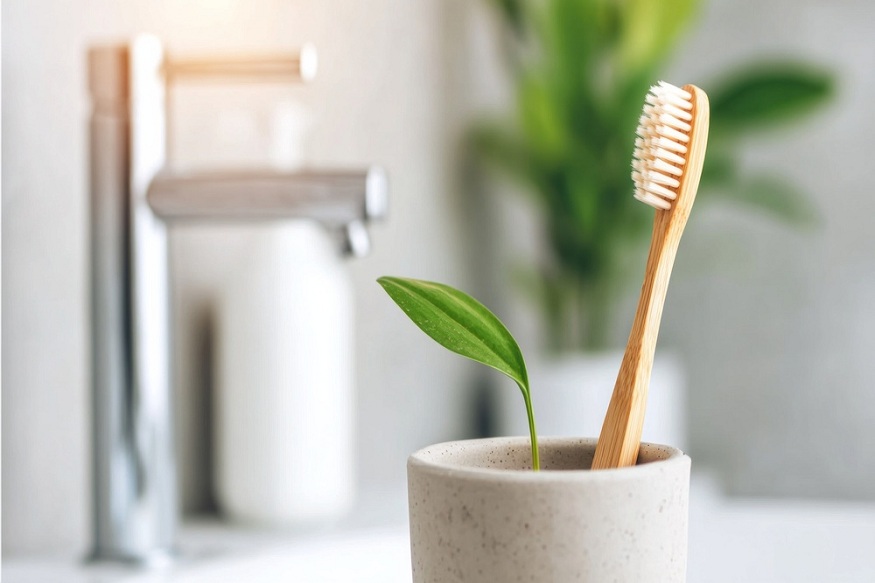
Bathrooms often contain many plastic items. Old tubes, brushes, and dusty bottles. We use these materials excessively, though they originate from oil and pollute landfills. The crazy part? You can brush your teeth without hurting the environment.
The Hidden Cost of a Healthy Smile
Americans toss about a billion toothpaste tubes yearly. Stack them up, and you have a monument to waste that would make any environmentalist cry. These tubes don’t disappear. They sit in dumps for centuries, slowly breaking into smaller pieces that never really go away.
Here’s what nobody talks about at the dentist’s office. Making all this plastic burns through fossil fuels like there’s no tomorrow. Then we ship bottles full of mostly water across the country in diesel trucks. Your morning brushing routine has a carbon footprint bigger than your actual footprint.
Rethinking the Basics
Who decided toothbrushes needed plastic handles, anyway? Bamboo works just fine. Better, actually, since it doesn’t sit in a landfill until the year 3000. Some smart cookie figured out you can make toothbrush heads that pop off and replace. Retain the handle, replace the bristles. Why wasn’t this idea thought of earlier?
Toothpaste tubes are pretty silly if you give them some thought. All that packaging for some paste. Toothpaste tablets do the same job. You chew one up and brush. Done. They come in glass jars you can actually recycle or refill. No more wrestling with rolled-up tubes at 6 AM.
Floss doesn’t escape scrutiny either. Silk floss exists. So does bamboo fiber floss. Both work great and break down naturally when you’re done. They come in little refillable containers that look way nicer on your counter than those plastic dispensers. Water flossers skip the whole disposable thing altogether, though they’re not for everyone.
Concentrated Solutions That Make Sense
This is painfully obvious. Why are we sending water across the nation when everyone has access to it? Concentrated products finally figured this out. Tiny bottles. Big results. Less waste all around. Take mouthwash concentrate as an example. Companies like Ecofam make these little bottles that turn into weeks of rinse when you add your own water. A tiny bottle replaces the big jugs that take up space. That’s a 90% reduction on plastic. Shipping costs drop. Storage gets simpler. Your recycling bin doesn’t fill up as fast.
The same logic works for toothpaste. Some tablets and powders pack months of cleaning into containers smaller than your coffee mug. They weigh nothing. TSA doesn’t hassle you about them. Plus, they’re effective, at times more so than the usual messy options.
Making the Switch Stick
Nobody expects you to overhaul your entire bathroom overnight. Pick something easy. Maybe try bamboo brushes next time you need new ones. They feel the same in your mouth but different in your conscience.
Money worries usually vanish once you crunch the numbers. Sure, that metal tongue scraper costs more than plastic initially. But it lasts forever. Those concentrated products seem pricey until you realize one bottle equals five regular ones. Do the math, and sustainable usually means savings.
It’s easier to find this stuff now. Bamboo brushes are now available in regular grocery stores. Pharmacies stock tablet toothpaste. Everything is available online quickly. The hard part isn’t finding alternatives anymore; it’s choosing which ones to try first.
Conclusion
Turns out sustainable oral care has nothing to do with suffering for the environment. The new ways clean just as well. Often better. Your teeth will not notice. Nevertheless, the planet will. Isn’t it time to stop treating Earth like a trash can for minty breath?